
General Information
ICIEA-EU 2027
welcomes proposals for special sessions within the technical scope of the conference.
Special sessions supplement the regular program of the conference and provide a
sample of the state-of-the-art research in both academia and industry in
special, novel, challenging, and emerging topics.
Special-session proposals should be submitted by the prospective organizer(s)
who will commit to promoting and handling the review process of their special
session as Chairs or Co-Chairs of the event.
Proposal Application
Please provide all the information requested above in PDF format by E-mail to iciea_eu@163.com before October 30, 2026
- Title;
- Name(s) of organizer(s);
- Email of main contact person;
- Brief bio(s) of organizer(s);
- Brief description;
- Related topics;
- Potential participants;
Special Session I
Machine Learning and Industrial Engineering with Applications
About the Session:
Machine Learning is a prospective area of investigation for several different aspects of Industrial Engineering. The aim of this section is to provide an overview of the emerging state-of-the-art research in the field. Papers and presentations about innovative research works relying on Machine Learning, both addressing Industrial Engineering problems directly, or supporting traditional approaches, are welcome.
- Artificial Intelligence
- Combinatorial Optimization
- Decision Analysis and Methods
- Decision Support Systems
- Deep Learning
- Information Processing and Engineering
- Intelligent Manufacturing Systems
- Logistics and Supply Chain Management
- Machine Learning
- Mathematical Programming
- Neural Networks
- Operations Research Applications
- Production Planning and Control
- Quality Control and Management
- Reliability and Maintenance Engineering
- Safety, Security and Risk Management
- Scheduling Problems
Submit Now:
https://easychair.org/conferences/?conf=icieaeu2027
Please choose session 1
Chairman:

Roberto Montemanni is full professor of operations research at the University of Modena and Reggio Emilia, Italy. He also acts as an external research advisor at the Dalle Molle Institute for Artificial Intelligence, University of Lugano, Switzerland. He obtained a Laurea degree in Computer Science from the University of Bologna, Italy and a Ph.D. in Applied Mathematics from the University of Glamorgan, UK. He has been administrating grants and leading basic and applied research projects both at national (Italy and Switzerland) and international levels. His main research interests are in the fields of mathematical modeling, algorithms and machine learning, with applications mainly in transportations, logistics and industrial engineering.
Special Session II
Recent Advances in Multi-robot Systems: Modeling, Optimization and Applications
About the Session:
In the last years, Multi-Robot Systems (MRS) have experienced considerable recognition due to various real-world applications. In particular, Multi-Robot Task Allocation (MRTA) is among the most interesting MRS problems. This problem concerns the situation when a set of given tasks must be performed by a team of mobile robots that collaborate with the intention of optimizing an objective function.
The first objective of this special session is to gather novel approaches devoted to MRS problems and applications. In particular, new contributions for the development of modeling and analysis methods, of verification algorithms and of specific control structures design are encouraged including theoretical and application papers. A non-exhaustive list of some potential topics is provided below:
- Modeling aspect, MILP formulations
- Optimization models and algorithms
- Dynamic routing and scheduling
- Formal methods
- Coordination and collaboration methods
- Artificial intelligence approaches
- Timed and energy constrained MRS problems
- Uncertain and dynamic environments exploration
- Collision and obstacle avoidance
- Applications for manufacturing systems, transportation systems, and so one.
Submit Now:
https://easychair.org/conferences/?conf=icieaeu2027
Please choose session 2
Chairmen:
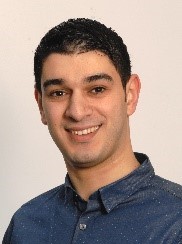
Rabah Ammour received the M.Sc. degree in complex systems engineering
from the Ecole Normale Supérieure de Cachan, France, in 2013 and the Ph.D.
degree in Automatic Control from Université Le Havre Normandie, France, in 2017.
Since 2018, he is an Associate Professor at Aix-Marseille Université, Marseille,
France. He is with the Laboratoire d'Informatique et Systèmes (LIS). His
research interests include the modelling, analysis and control of discrete event
systems using Petri nets. (E-mail:
rabah.ammour@lis-lab.fr)

Saïd Amari received the Ph.D. degree from the Institute of Research in Communications and Cybernetic of Nantes, France, in 2005. He is currently an Associate Professor (HdR) at the University of Sorbonne Paris Nord. He carries out research at the Automated Production Research Laboratory from the École Normale Supérieure Paris-Saclay. His main research interests are performance evaluation of networked automation systems, modelling and control of discrete event systems using Petri nets, dioid algebra and timed automata with guards. (E-mail: said.amari@lurpa.ens-cachan.fr)

Dimitri Lefebvre (M'11, SM'19) received the S.B. in Science and Engineering in 1990, the M.Eng. degree in Automatic Control and Computer Science in 1992, and the Ph.D. degree Automatic Control and Computer Science in 1994, all from University of Sciences and Technologies and Ecole Centrale in Lille, France. In 1995, he joined the University of Franche Comté, Belfort, France, where he served as Associate Professor with the Department of Electrical Engineering and the Research Group about Systems and Transportations. Since 2001, he has been with Université Le Havre Normandie (ULHN), France as Full Professor. He is currently with the Research Group on Electrical Engineering and Automatic Control (GREAH) in Le Havre and was from 2007 to 2012 the head of the group. His current research interests include fault diagnosis and control design for dynamic systems, discrete event systems, learning processes and artificial intelligence, with applications to network security and safety in the domains of electrical engineering, robotics, transportations and logistics. He is the author of more than 140 articles published in indexed journals and more than 250 communications in international conferences. (E-mail: dimitri.lefebvre@univ-lehavre.fr)
Special Session III
Advanced Intelligent Scheduling and Optimization in Modern Production and Manufacturing
Systems
About the Session:
As modern manufacturing landscapes transition toward Industry 4.0 and smart factories, production systems face highly dynamic, volatile, and multi-objective constraints. Traditional operations research methods often struggle with computational scalability and real-time adaptability when managing complex scheduling problems. This special session aims to gather the latest pioneering research that leverages Artificial Intelligence and cutting-edge computational intelligence to solve modern industrial scheduling challenges. The session focus is twofold: exploiting advanced evolutionary architectures (such as multi-objective differential evolution and swarm intelligence) and harnessing the real-time decision-making power of Deep Reinforcement Learning (DRL). We welcome high-quality, innovative submissions that address theoretical advancements, algorithmic design, and real-world industrial applications aiming to optimize productivity, minimize costs, and enhance energy efficiency in production lines. Papers and presentations focusing on the following themes (both theoretical and applied) are highly encouraged:
- Deep Reinforcement Learning (DRL) for Real-Time Production Scheduling
- Multi-Objective Optimization and Evolutionary Algorithms (e.g., Differential Evolution, Swarm Intelligence)
- Energy-Efficient Scheduling in Modern Manufacturing Systems
- Smart Job-Shop and Flexible Flow-Shop Scheduling
- Meta-Heuristics and Hybrid Optimization Frameworks for Logistics and Manufacturing
- Data-Driven Decision Making in Dynamic Production Environments
- Intelligent Manufacturing and Smart Factory Operations Management
- Sustainable and Green Production Planning and Control
- Resource constraint project scheduling
Submit Now:
https://easychair.org/conferences/?conf=icieaeu2027
Please choose session 3
Chairmen:

Dr. Mudassar Rauf is an
Associate Professor in the School of Mechanical and Electrical Engineering
at Wenzhou University, China. He holds a Ph.D. in Mechanical Engineering
with a specialization in Industrial Engineering from the Huazhong University
of Science and Technology (HUST). His research primarily focuses on the
intersection of Artificial Intelligence and advanced manufacturing, with
specific expertise in Deep Reinforcement Learning (DRL), Meta-Heuristics,
Multi-Objective Optimization, and Evolutionary Algorithms applied to complex
industrial and job-shop scheduling problems. Dr. Rauf has published several
high-impact research papers in leading indexed journals, including the
Applied Soft Computing Journal, Computers & Industrial Engineering and
Journal of Industrial Information Integration, introducing innovative
algorithmic frameworks to optimize energy efficiency and production
performance in parallel batch processing and modern industrial systems. He
welcomes opportunities for international academic collaboration and joint
research initiatives in the domain of smart manufacturing.

Dr. Jabir Mumtaz is an Associate Professor in the College of Mechanical and Electrical Engineering at Wenzhou University, China. He has more than eight years of academic and industrial experience, with research expertise in operations research, production planning and scheduling, smart manufacturing, digital twin technologies, industrial system optimization, and artificial intelligence-based optimization algorithms. His research mainly focuses on the application of advanced optimization techniques and intelligent manufacturing systems to improve industrial efficiency, productivity, and operational performance. Dr. Mumtaz has published more than 20 research articles in high-impact journals and conferences and has collaborated with various academic and industrial partners on research related to Industry 4.0, supply chain management, production planning, scheduling, and industrial optimization. In addition to his research contributions, he teaches undergraduate and graduate courses in mechanical engineering, industrial engineering, and engineering management programs. He is actively open to research collaborations in smart manufacturing, supply chain optimization, production scheduling, and AI-driven industrial systems.
Special Session IV
Generative AI for Project Management and Project Scheduling: Methods, Models and Applications
About the Session:
The rapid advancement of Generative Artificial Intelligence (GenAI) is transforming the way organizations plan, execute, monitor, and control projects. Recent developments in large language models, generative analytics, intelligent assistants, and AI-driven decision-support systems are creating new opportunities to enhance project management practices and improve project outcomes. From automating project documentation and stakeholder communications to supporting risk analysis, resource allocation, and schedule optimization, Generative AI is becoming an increasingly important component of modern project environments.
Project scheduling, in particular, presents a fertile area for the application of GenAI techniques. Intelligent systems can assist project managers in generating schedules, identifying potential bottlenecks, proposing mitigation strategies, simulating alternative scenarios, and supporting real-time decision making under uncertainty. At the same time, challenges related to reliability, explainability, governance, ethics, and human-AI collaboration require further investigation.
This special session aims to bring together researchers and practitioners to discuss innovative theories, methods, models, tools, and applications of Generative AI in project management and project scheduling. The session welcomes original contributions addressing methodological developments, empirical studies, industrial applications, case studies, and emerging research directions that explore the role of GenAI in improving project planning, execution, control, and organizational learning.
- Generative AI for project planning and scheduling
- AI-assisted resource allocation and optimization
- Energy-Efficient Scheduling in Modern Manufacturing Systems
- Large Language Models (LLMs) in project management
- Generative AI for risk identification and assessment
- Intelligent decision-support systems for project managers
- AI-driven project monitoring and control
- Schedule generation, analysis, and forecasting
- Human-AI collaboration in project environments
- Explainability and trust in AI-supported project decisions
- GenAI for stakeholder communication and reporting
- Multi-project and portfolio management applications
- Digital project assistants and project copilots
- Ethical, governance, and security issues in AI-enabled projects
- Industrial case studies and best practices
- Future trends and research challenges in AI for project management
This special session seeks to advance knowledge on how Generative AI can reshape project management and scheduling practices, enabling more informed, efficient, and adaptive decision making in increasingly complex project environments.
Submit Now:
https://easychair.org/conferences/?conf=icieaeu2027
Please choose session 4
Chairmen:

Anabela Tereso holds a degree in Systems Engineering and Informatics, a Master's degree in Informatics, and a PhD in Production and Systems Engineering. She is an Assistant Professor with Habilitation in the Department of Production and Systems and a researcher at the ALGORITMI Research Centre, University of Minho, Portugal.
She founded the Master's Programme in Engineering Project Management at the University of Minho and has served on its management board since its inception. Her research interests include project management, project scheduling, resource allocation, risk management, decision analysis, artificial intelligence, and their practical applications.
Anabela has authored more than 150 scientific publications, supervised over 100 MSc and PhD dissertations, and participated in numerous national and international research projects. She is also the creator of the Portuguese Project Management Observatory, an initiative of APOGEP (Portuguese Project Management Association).
She holds professional certifications in project management from both IPMA (IPMA-D) and PMI (PMP). Her research impact is reflected in a Scopus H-index of 14 and a Google Scholar H-index of 23.
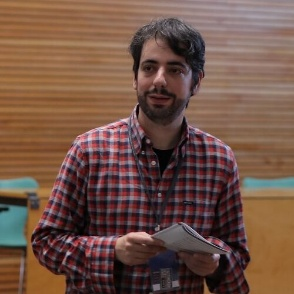
André Serra e Santos holds a PhD in Engineering and Industrial Management (2020) from the School of Engineering at the University of Minho, Portugal. He is an Assistant Professor in the Department of Mechanical Engineering at the Instituto Superior de Engenharia do Porto (ISEP), part of the Polytechnic University of Porto, Portugal. He teaches several undergraduate and master's-level courses in Mechanical Engineering, Industrial Engineering and Management, Chemical Engineering, Sustainable Energy, and Supply Chain Engineering and Management.
He conducts his research at the Interdisciplinary Studies Research Center (ISRC), located on the ISEP campus. His main research interests include approximation techniques, metaheuristic parameter tuning, dynamic scheduling, and real-time scheduling. His current research impact includes a Scopus H-index of 8.

Bruno Cunha holds a Bachelor's degree, a Master's degree in Computer Science Engineering, and a PhD in Informatics. He is an Assistant Professor at Portucalense University and an integrated researcher at CINTESIS.UPT@RISE-HEALTH, where he co-founded the Translational Cognitive Neuroscience group. His research interests include artificial intelligence, machine learning, reinforcement learning, computer vision, optimization, and digital health applications. He has authored and co-authored scientific publications in these areas, contributed to funded research projects as a researcher and principal investigator, and serves as a reviewer and editor for scientific journals. He has supervised over 30 master's and bachelor's dissertations, participates in university governance through committee and management roles, and has received an award for pedagogical innovation. His current research impact includes a Scopus H-index of 7 and a Google Scholar H-index of 9.